
Sleep apnoea during pregnancy is an increasingly recognised condition that can affect both maternal wellbeing and pregnancy outcomes. Hormonal changes, weight gain, and altered breathing patterns can increase the risk of sleep-disordered breathing during pregnancy. Understanding the causes, early warning signs, and available treatment options helps expectant mothers protect their health and support a safer pregnancy.
What Is Sleep Apnoea in Pregnancy?
Sleep apnoea is a sleep-related breathing disorder where airflow is repeatedly reduced or stopped during sleep. During pregnancy, obstructive sleep apnoea (OSA) is the most common type and occurs when the airway becomes partially or completely blocked.
Pregnancy-related physical and hormonal changes can make the airway more prone to collapse, especially during the second and third trimesters.
Why Pregnancy Increases the Risk of Sleep Apnoea
Several pregnancy-specific factors can contribute to the development or worsening of sleep apnoea:
- Weight gain placing extra pressure on the airway
- Hormonal changes causing nasal congestion and airway swelling
- Fluid retention narrowing the upper airway
- Reduced lung volume when lying flat
- Increased oxygen demand
Women who already snored or had mild sleep-disordered breathing before pregnancy may notice symptoms becoming more pronounced.
Common Signs and Symptoms to Watch For
Sleep apnoea symptoms during pregnancy can be subtle and are often mistaken for normal pregnancy fatigue. Warning signs include:
- Loud or frequent snoring
- Pauses in breathing during sleep
- Gasping or choking at night
- Excessive daytime tiredness
- Morning headaches
- Poor sleep quality despite adequate time in bed
If these symptoms persist, professional assessment is recommended.
Health Risks of Untreated Sleep Apnoea in Pregnancy
Untreated sleep apnoea during pregnancy has been linked to several maternal and foetal risks, including:
- Gestational hypertension and pre-eclampsia
- Gestational diabetes
- Increased risk of caesarean delivery
- Poor sleep quality affecting mental health
- Reduced oxygen supply during sleep
Early identification plays an important role in reducing these risks.
How Sleep Apnoea Is Diagnosed During Pregnancy
Diagnosis usually involves a clinical evaluation and, in some cases, a sleep study. Home sleep testing may be recommended as a safe and convenient option during pregnancy, depending on individual circumstances.

Treatment Options for Sleep Apnoea During Pregnancy
CPAP Therapy
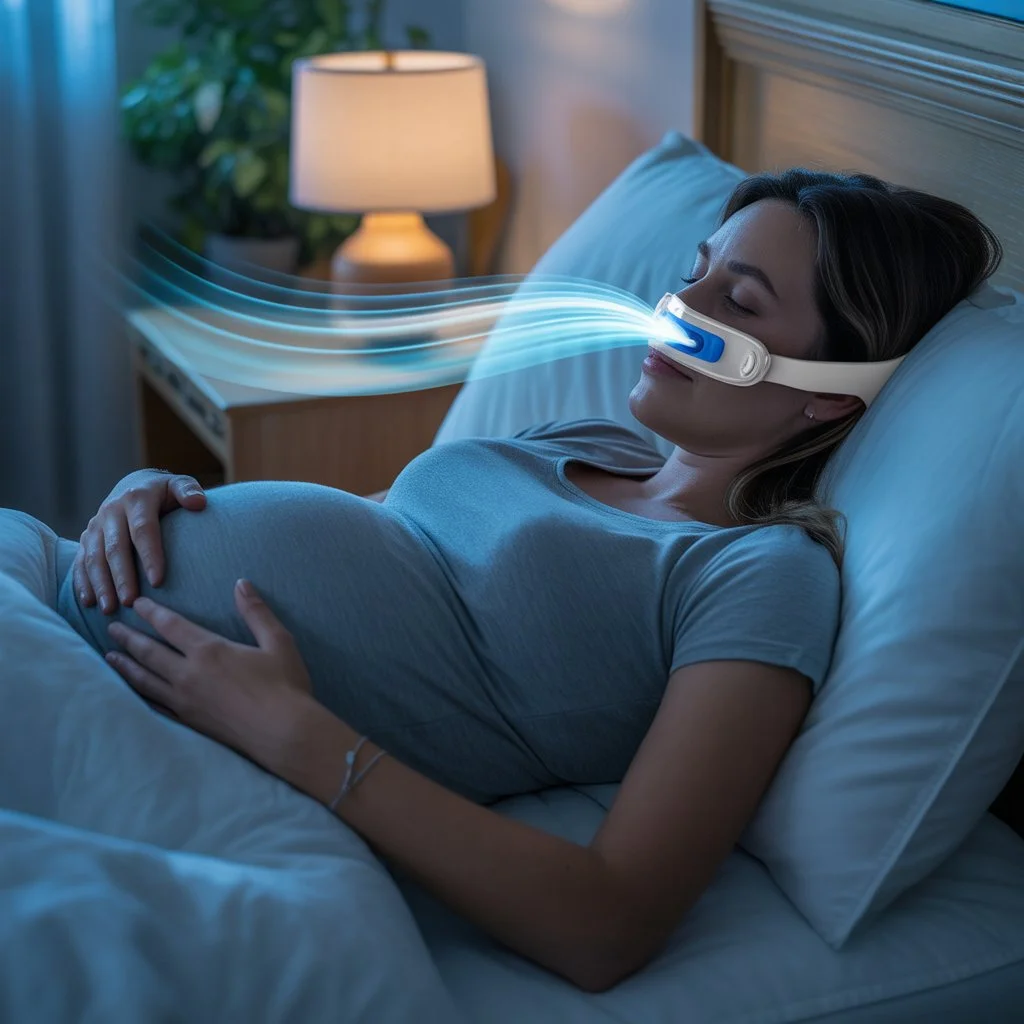
Continuous Positive Airway Pressure (CPAP) therapy is considered the gold standard treatment for moderate to severe sleep apnoea during pregnancy. It works by keeping the airway open with gentle, pressurised air and is safe for both mother and baby.
Many women experience improved energy levels, better sleep quality, and reduced pregnancy-related complications with consistent CPAP use.
Lifestyle and Sleep Position Adjustments
For mild cases, simple changes may help reduce symptoms:
- Sleeping on the side rather than the back
- Elevating the head slightly
- Managing nasal congestion with pregnancy-safe treatments
- Maintaining healthy pregnancy weight gain
These strategies are often used alongside medical treatment rather than as standalone solutions.
Oral Appliance Therapy (Selected Cases)
In carefully selected cases of mild obstructive sleep apnoea, a custom-fitted oral appliance may be considered. These devices reposition the jaw to help maintain an open airway during sleep. Suitability must be assessed by a qualified dental sleep professional in collaboration with the patient’s healthcare team.
Can Sleep Apnoea Resolve After Pregnancy?
In some cases, sleep apnoea symptoms improve or resolve after delivery as hormone levels stabilize and pregnancy-related weight and fluid retention decrease. However, women who had sleep apnoea before pregnancy or who retain risk factors may need ongoing monitoring and management.
Follow-up after childbirth helps determine whether continued treatment is necessary.
Final Thoughts
Sleep apnoea during pregnancy is more common than many people realise and should not be ignored. Recognising the signs early and seeking appropriate care can significantly improve sleep quality, maternal health, and pregnancy outcomes. With modern diagnostic tools and safe treatment options, sleep apnoea can be effectively managed throughout pregnancy and beyond.