
How I Choose the Right Splint for Each Patient: SomnoMed, O2Vent or 3D Sleep?
Quick Answer: A splint brand comparison matters less than most people expect. SomnoMed, O2Vent and 3D Sleep are all custom mandibular advancement splints, and I fit these and other designs. The evidence supports custom, adjustable splints over ready made ones, but it does not crown one brand. The right choice depends on your teeth, jaw joints, bite and comfort, and on careful fitting and follow up, not on the brand name.
Why patients ask me to compare splint brands
I have obstructive sleep apnoea myself. I could not tolerate CPAP, so I wear a mandibular advancement splint every night. That is part of why patients trust me with this decision, and it is why they ask the question I hear most often: which brand is the best one?
I understand the instinct. You are about to pay for a device you will wear every night for years, and you want the right one. So you read about SomnoMed, O2Vent, 3D Sleep and others and try to work out which name wins.
Once you have chosen a custom, adjustable splint that is made and fitted properly, the brand on the box is one of the smaller factors in whether it works for you. A splint brand comparison is a reasonable place to start. It is not where the decision is actually made.
What a mandibular advancement splint actually does
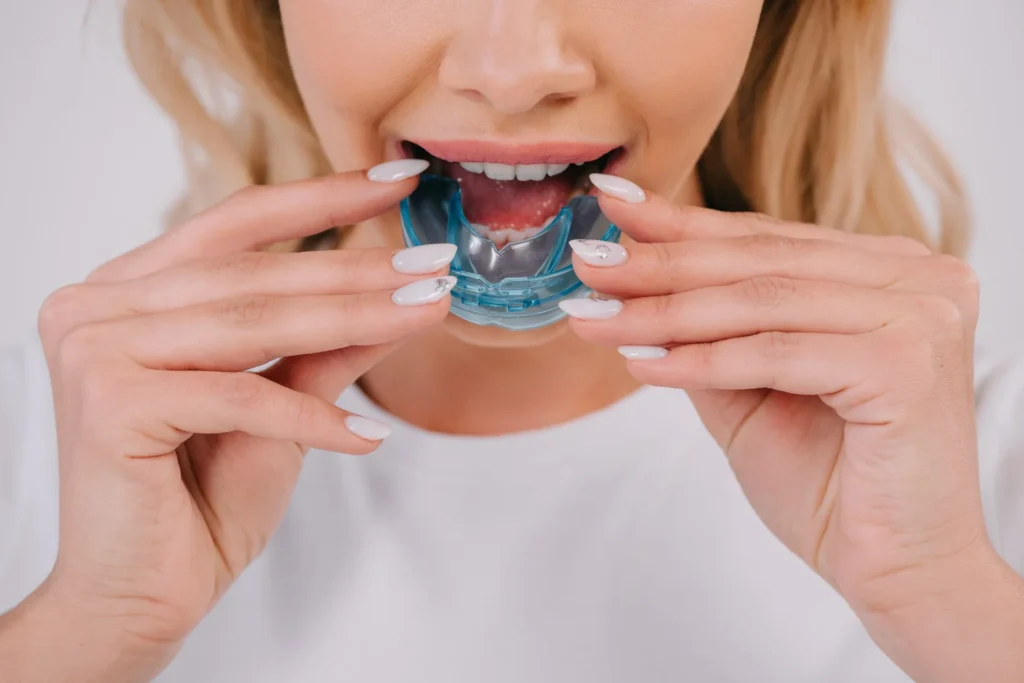
Every splint I am talking about does the same core job. It holds your lower jaw a few millimetres forward while you sleep. That small change draws the base of the tongue and the soft tissue at the back of the throat forward, and helps keep the airway open. When the airway stays open, the tissue vibrates less, so you snore less, and the breathing pauses that mark mild to moderate sleep apnoea happen less often.
SomnoMed, O2Vent and 3D Sleep, for example and among others I work with, are all mandibular advancement splint brands built on that one principle. They are custom made to fit your own teeth. That shared foundation counts for more than the differences between them.
The design families behind the brand names
The named brands are really a few families of design. I will describe them plainly rather than sell you one.
- How the jaw is held forward. Some designs use small connectors or fins on the sides to guide the lower jaw. Others use straps, or interlocking blocks, or a different join between the upper and lower plates. They reach a similar position by different routes.
- How adjustable it is. The designs I use are titratable. That means I can advance the jaw in small steps over several weeks, rather than setting it once and hoping. This is one of the features that genuinely matters.
- The material and the bulk. Some appliances are firmer, some have a softer inner lining, some are slimmer. A thinner device is not automatically a better one. It still has to be strong enough to hold the position and to last.
- A front opening. Some designs include a small opening at the front, or even a breathing “tube”, so you can still breathe through your mouth if your nose blocks up. Whether that helps depends on your own breathing.
I work with platforms such as SomnoMed, O2Vent and 3D Sleep, among others. I am not tied to one brand. I treat them as tools and match the tool to the patient, which is the part a splint brand comparison on its own can never do for you.
What the evidence says about splint brands
The research does not crown a single brand. What it does show clearly is which kind of splint works.
Custom devices beat the ready made, boil and bite type. In a randomised trial comparing the two, the custom device produced a complete response in about 64 percent of patients, against about 24 percent for the ready made one, and outright failure was far lower with the custom device, at 4 percent against 36 percent [1]. The clinical guidelines reflect this. They recommend a custom, titratable appliance over a non custom one, fitted by a qualified dentist [2]. Across the trials those guidelines reviewed, oral appliances lowered the number of breathing events an hour by roughly 14 on average [2].
So the useful question is not which snoring splint has the best marketing. It is whether the splint is custom and adjustable, and whether the person fitting it knows this area well.
How I choose the right splint for each patient
This is the part that decides the outcome. I start with a digital scan of your teeth. We use an intraoral scanner, not messy impression putty. Then I weigh up several things.
- Your teeth. A splint grips your teeth, so I need enough healthy, stable teeth to hold it. Crowns, bridges, implants and other dental work all change what will grip safely.
- Your jaw joints. If you have a history of jaw joint pain or clicking, some designs and some amounts of advancement suit you better than others.
- Your bite. How your teeth meet affects which mechanism sits comfortably and does the job.
- Your gag reflex. A bulkier design at the back of the mouth is harder for some people to tolerate. That alone can decide the choice.
- Comfort and habit. You have to be willing to wear it. A device that sits in the drawer does nothing.
Because I work with many designs, I match the design to what I find, rather than fit everyone with the same device. Results still vary between people, and I will tell you honestly if I think a splint is a poor fit for your mouth.
Why fitting and follow up matter more than the brand
A splint is not finished the day it is made. The jaw position has to be adjusted, a little at a time, until you reach the most benefit for the least strain on your jaw and teeth. That titration, and the review visits that go with it, are where a splint earns its result. Oral appliance treatment is an established option for snoring and mild to moderate sleep apnoea, and how well it works depends heavily on getting the fit and the jaw position right [3]. The guidelines are clear that a qualified dentist should fit the device and follow it up [2].
That is how we have set our fee. It is between $2,000 and $2,500, all inclusive, with no hidden costs. It covers the assessment, the digital scan, the custom device, the fitting, and every adjustment and review visit in the first 12 months. I hold the Fellowship of Dental Sleep Medicine with the Australasian Sleep Association, and I treat the follow up as part of the treatment. We are on the Nepean Highway in Mt Eliza, and patients come to us from across the Mornington Peninsula, Frankston and the bayside suburbs.
When a splint is not the answer
A mandibular advancement splint suits snoring and mild to moderate obstructive sleep apnoea, or people who cannot tolerate CPAP, which was my own situation. For severe sleep apnoea, CPAP is the first line treatment and controls the condition more effectively on a sleep study. A splint is not a cure, and it is not right for everyone.
You also need a diagnosis first. I do not diagnose sleep apnoea in the chair. That is arranged through your GP or a sleep physician, with a sleep study, because obstructive sleep apnoea should not be diagnosed without one [4].
If you are weighing up your options, you may find my guide on how to stop snoring useful, along with my article on snoring mouthguards and the one on what a splint costs. If you want to know whether a splint fits your situation, your GP can refer you, or you can call the clinic on 03 9775 4600.
Frequently Asked Questions
Is SomnoMed better than O2Vent or 3D Sleep?
No brand is simply better. They are all custom mandibular advancement splints that hold the lower jaw forward, and each one suits some mouths better than others. The evidence supports custom, adjustable splints as a group over ready made ones, but it does not rank one brand above the rest. The right choice depends on your teeth, jaw and comfort.
Does the brand of splint decide whether it works?
The brand is a minor factor. What matters far more is that the device is custom made, that it can be adjusted over time, and that it is fitted and reviewed by a dentist who works in this area. A well fitted device from any of these families will usually do more for you than a well known name that is fitted poorly.
Can I just buy a cheaper splint online?
You can, but the research shows custom devices work considerably better than the ready made, boil and bite type, with a much lower failure rate. A shop bought device also skips the check of your teeth and jaw, and the diagnosis that should come first. I would rather you spent your money once, on something matched to your mouth.
How do you decide which design suits me?
I take a digital scan and assess your teeth, existing dental work, jaw joints, bite and gag reflex. Because I work with several designs, I match the device to what I find rather than fit everyone the same one. If a splint is a poor fit for your situation, I will say so.
Which splint is best for severe sleep apnoea?
For severe obstructive sleep apnoea, a splint is usually not the first choice. CPAP is the first line treatment and controls severe apnoea more effectively on a sleep study. A splint may still have a role if you cannot tolerate CPAP, but that is a decision to make with your sleep physician.
This article is general information, not a diagnosis or personal treatment advice. Obstructive sleep apnoea is diagnosed through your GP or a sleep physician. Whether a mandibular advancement splint suits you, and which design, depends on your own teeth, jaw and health, and results vary between individuals. Please speak with a suitably qualified clinician about your own situation.
References
[1] Johal A, et al. Ready-made versus custom-made mandibular repositioning devices in sleep apnea: a randomized clinical trial. Journal of Clinical Sleep Medicine. 2017;13(2):175-182. https://pmc.ncbi.nlm.nih.gov/articles/PMC5263072/
[2] Ramar K, et al. Clinical practice guideline for the treatment of obstructive sleep apnea and snoring with oral appliance therapy: an update for 2015. Journal of Clinical Sleep Medicine. 2015;11(7):773-827. https://aasm.org/resources/clinicalguidelines/oral_appliance-osa.pdf
[3] Sutherland K, et al. Oral appliance treatment for obstructive sleep apnea: an update. Journal of Clinical Sleep Medicine. 2014;10(2):215-227. https://pmc.ncbi.nlm.nih.gov/articles/PMC3899326/
[4] Kapur VK, et al. Clinical practice guideline for diagnostic testing for adult obstructive sleep apnea: an American Academy of Sleep Medicine clinical practice guideline. Journal of Clinical Sleep Medicine. 2017;13(3):479-504. https://aasm.org/resources/clinicalguidelines/diagnostic-testing-osa.pdf